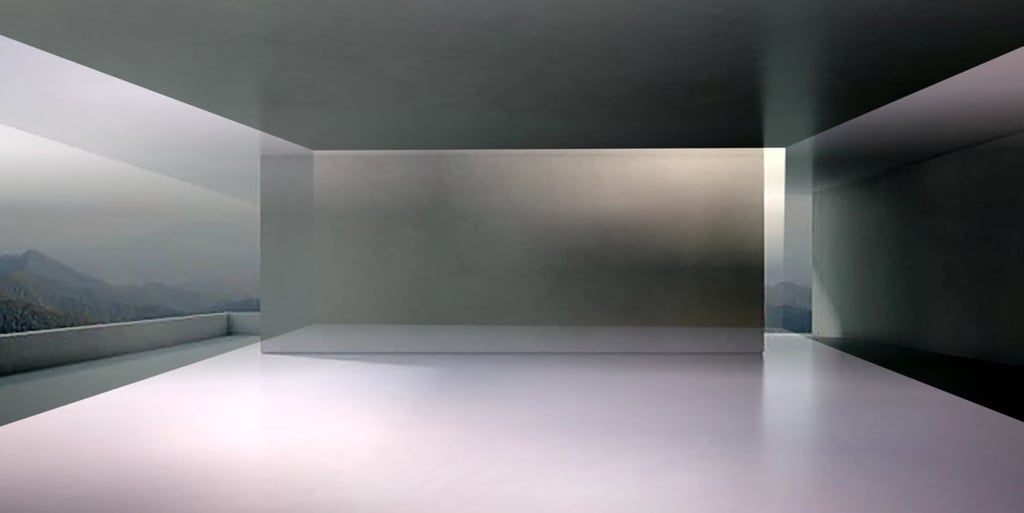
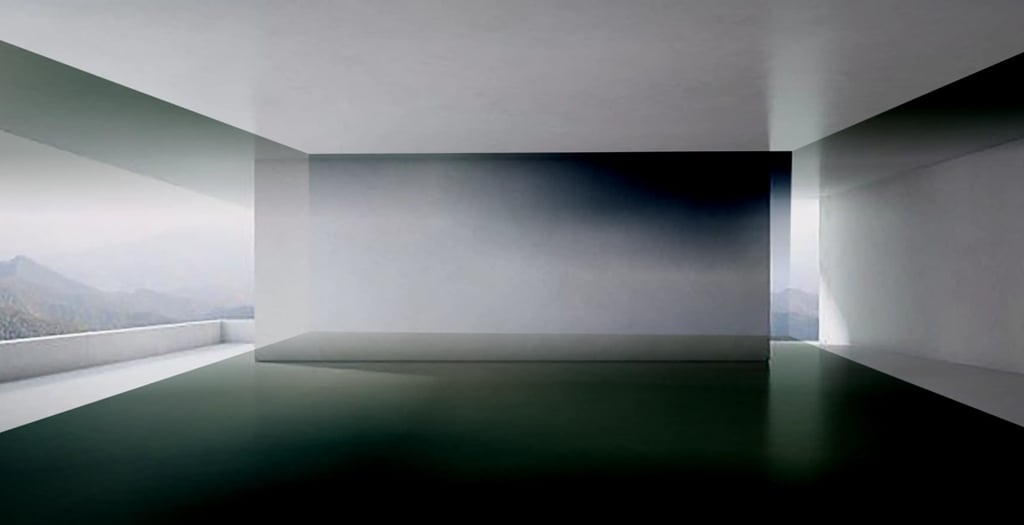
SYSTEM(S) imagines the home as a breathing landscape—an environment that listens, responds, and composes atmospheres in real time. Walls cease to be boundaries and become membranes of sensation; light, sound, and texture drift through the space like choreographed weather. Inhabitants move within this living architecture as both performers and witnesses, shaping the ambience through their gestures, rhythms, and desires. In this speculative habitat, technology dissolves into the background, becoming an invisible companion that modulates the emotional climate of daily life. Rooms expand, contract, or transform according to the pulse of the day, the presence of others, or the quiet solitude of night. The home becomes a sensitive organism, an intimate ecosystem where the real and the virtual fold into one another, forming a continuum of shifting moods and perceptual states. System(S) proposes a future in which domestic space is not simply inhabited but felt, no longer merely functional, but sensorially alive. It is an architecture of atmospheres, a choreography of sensations, a place where living becomes an immersive experience. At the same time, System(S) positions the home as a post‑digital interface: an adaptive, multisensory system where architecture and computation merge into a unified experiential field. Instead of treating technology as an external device or visible layer, the project embeds digital processes into the material fabric of the environment, rendering them ambient, distributed, and perceptually integrated. This design challenges conventional typologies of domestic space by proposing transformable zones that respond to temporal cycles, social configurations, and embodied presence. These zones operate as dynamic sensitive‑spaces, where spatial functions emerge not from fixed programs but from sensory modulation—light gradients, acoustic textures, thermal shifts, and haptic surfaces. Within this framework, the home becomes a hybrid ecology, an immersive continuum where physical and virtual layers coexist and interact. Interfaces are no longer screens but architectural elements, walls, floors, windows, and ceilings acting as communicative membranes that mediate flows of information, affect, and connection between inside and outside. System(S) ultimately speculates on a future domesticity shaped by post‑digital sensibilities: fluid, atmospheric, relational, and deeply attuned to the lived experience of its inhabitants. It imagines a model of space in which perception becomes a design material and the choreography of sensations forms the core of spatial practice.
system(S)
Speculative Sensitive‑Space Design in a Post‑Digital Domestic Ecology